Soulless
*soulless (adj.) — the word we reach for the moment a machine does the thing we were sure needed a person.*
My philosophy teacher spent the better part of a year, gently and with great affection, holding me up to the class as a fool.
He never mocked me. That was the strange part: it would have been easier if he had. Whenever he wanted to show the room what it looks like to be young and certain and wrong, he'd reach, fondly, for something I'd said one afternoon: that a machine might one day think. He brought it up the way you'd point out a small child sure the moon is following the car. Look how much he still has to learn about life. Forty heads would turn toward me, kindly, and I would sink an inch in my seat.
This was a Catholic school in Buenos Aires in the late 1980s; I was sixteen, and the teacher was a layman, proud of having reasoned his way to his conviction rather than inheriting it, or believed he had. The conviction was clean: intelligence is the work of a soul, and a soul is the one thing that is ours alone, so a machine could no more think than a stone could dream. (Whether he was right about souls is a different essay, and not one I want to write.) What mattered was the corollary: a boy who imagined a thinking machine had simply not yet learned how the world is built.
He took me for a dreamer, and there he had me dead to rights. I'd grown up on thinking machines (KITT, the talking car from Knight Rider; the starship in Flight of the Navigator that began as a cold computer and taught itself to crack jokes), and to me a mind made of circuits was never a fantasy. It was a forecast. What he didn't know was that I'd already watched the forecast begin to arrive, in the computing department of Argentina's national bank, where my mother worked.
She took me along sometimes, and each visit the future had moved. Punch cards gave way to tape; then a new IBM System/36, a gray box beside the aging mainframe, holding more power than the giant it was quietly making obsolete. What struck me wasn't only that the machines were shrinking, but how fast they were devouring work that used to take people, and rooms, and days. To me, that box wasn't a refutation of the dream; it was a delivery date.
I carried something else out of that building, too. I was twelve, learning to program at home on a Texas Instruments TI-99/4A, and when I told one of my mother's colleagues I meant to make a life in systems (the term for the work back then, before anyone said developer), he stopped me with a warning I've never shaken. Systems doesn't mean the program you type into the machine, he said. It means the whole thing, the people included. I filed it under adults-being-cryptic. It was the truest thing anyone ever told me about this work.
What neither my teacher nor I knew was that the proudest machines of that moment were about to fail at the very thing he swore they never could, and fail in a way that quietly conceded his deepest point. The great hope of 1980s AI was the expert system: capture an expert's judgment as thousands of if–then rules and let a machine run the list. It was dazzling inside its box and shattered an inch beyond it, because the world keeps producing cases nobody wrote a rule for. The lesson took me decades to phrase: the moment you write judgment down as a fixed rule, it stops being judgment. He'd said a mind cannot be a mechanism. The machines were proving something stranger: that a mind cannot be a list of rules. From where he sat, the two looked like the same victory.
Chess was supposed to be the last redoubt — the one game you couldn't be good at without truly thinking. So watch the goalposts move. In 1988 a computer beat a grandmaster in tournament play for the first time, and the verdict was instant: that's not thinking, it's just brute search. The machine did the thing, so the thing stopped counting. In 1997, when Deep Blue beat the world champion, Garry Kasparov found one move too subtle, too human to credit, and accused IBM of hiding a grandmaster inside the machine.
Now look where that same suspicion points. When a player rises above himself today, nobody pictures a human hiding in the machine; they picture a machine hiding in the human. Nobody decided that inversion — it came in the way weather does. And the whole story I want to tell you is folded inside it.
Once, playing like a god proved you were human. Now it proves you're not.
So my teacher was wrong and the boy was right, and if that were the whole of it, this would be a smug little essay, the kind I try not to write. It isn't, for two reasons.
The first is that I was right about the destination and wrong, like nearly everyone, about the road. None of what I'd seen — the punch cards, the box that outran the mainframe, the chess machines grinding through millions of positions — was the road that led to what may be reading over your shoulder right now. The thinking machines didn't come from rules written down. They came from the other direction entirely: patterns no one specified, learned from oceans of examples. If that sounds like the same hype that froze the field twice before (and it has frozen, hard), notice what cracked each time: the attempt to write a mind down as rules. This one didn't. Not a mind built. A mind grown.
The second is the actual subject of this essay. My teacher was defending something real. He had the wrong address for it, but he wasn't wrong that it exists — some part of us that isn't a mechanism, that the machines weren't going to take. He filed it under intelligence and lost, because intelligence turned out to be exactly the kind of thing a mechanism can do. The instinct under the word was sound. He was pointing at the human. He just pointed at the wrong organ.
It's the oldest reflex we have about our own tools, and we keep it sharpened as an insult. Soulless. The photograph was soulless: a machine made it, not a hand. The recording was soulless: canned music, no human throat. The chair was soulless: stamped out, not carved. Every time, the one crying soulless was guarding something true while pointing at something false: the soul was never in the part the machine took. But don't read what follows as they panicked before, so the skeptics are fools now. This machine reaches into language (the medium where we work out what we mean), and that makes the fear different, and serious. Take it as a pattern to learn from, not a verdict.
When execution gets cheap, the scarce thing becomes judgment — what to make, what to refuse, what is worth doing at all. I've made that case twice before, looking outward at the work. This is the same argument turned inward, because the question now isn't what happens to the work. It's what happens to you. If a machine can have the part you thought was you, which part was ever actually yours?
This essay is no exception: a machine helped write it, and writing is thinking, so the line between its part and mine is messier than I'd like. But the value never lived in the keystrokes; it lived in the person choosing which ones were worth making.
And I'm not the first to face it. People have answered before — the ones whose entire job was the thing the machine came for, who woke one morning to find that the most valuable thing about them had just become free. It's worth knowing what they did.
The women who were computers
Before it named a machine, computer named a person (almost always a woman) whose job was to do mathematics by hand. My mother's department was still called cómputos; by her day the computing belonged to the machines, but the word remembered who had done it first.
It was one of the few careers open to college-educated women, and the whole job was the one thing a machine was about to do for free. When the electronic computers arrived in the 1950s, the men who ran the labs didn't trust them, and dismissed the work of telling a machine what to do as clerical drudgery — women's work. So they handed the machines to the women. Which is how many of the people whose jobs were being automated became some of the first programmers of the electronic age.
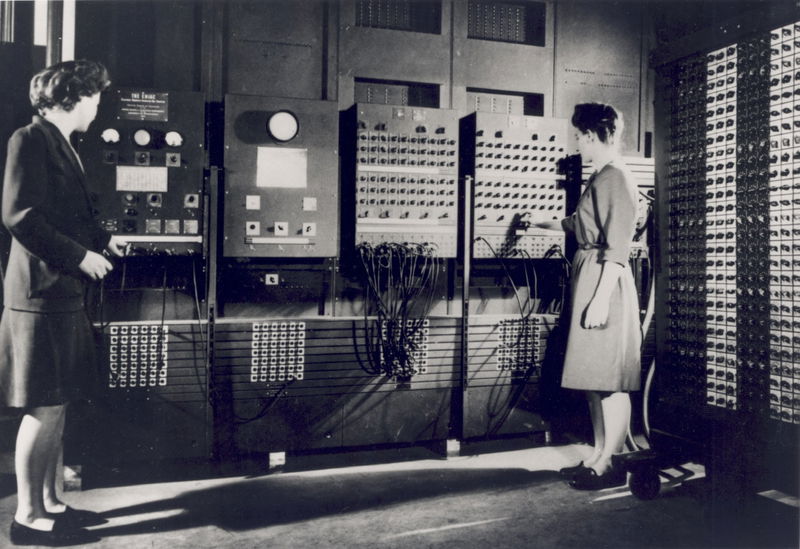
Look at what actually moved. The arithmetic, the part you could time with a stopwatch, went to the machine. The women went up, from doing the calculation to commanding the thing that did it. Their value was never the arithmetic; that was only the surface, the part that fit on a job description. What they owned was an understanding of what the numbers were for — exactly what the machine couldn't supply.
Dorothy Vaughan saw it before most: a human computer at NASA's Langley, she taught herself FORTRAN from a manual and then taught it to her whole team, walking a section of human computers across the bridge before it burned.
It wasn't tidy. Many never crossed; the work simply thinned beneath them, and the ones who did were written out of the story. Hold onto that — it comes back. But the shape is the shape of everything that follows: when the machine comes for the part you can measure, the people who come through are the ones who knew the measurable part was never the point.
A machine made it
That story had heroes. This one has critics, because when the machine comes not for arithmetic but for something we call art, the reaction curdles, and it reaches for a particular word.
The complaint is older than any machine you'd recognize. When Gutenberg's press began turning out books in the 1450s, a Benedictine abbot named Johannes Trithemius wrote a fervent tract urging his monks to keep copying by hand — and, to get his hymn to handwriting read, had it printed.
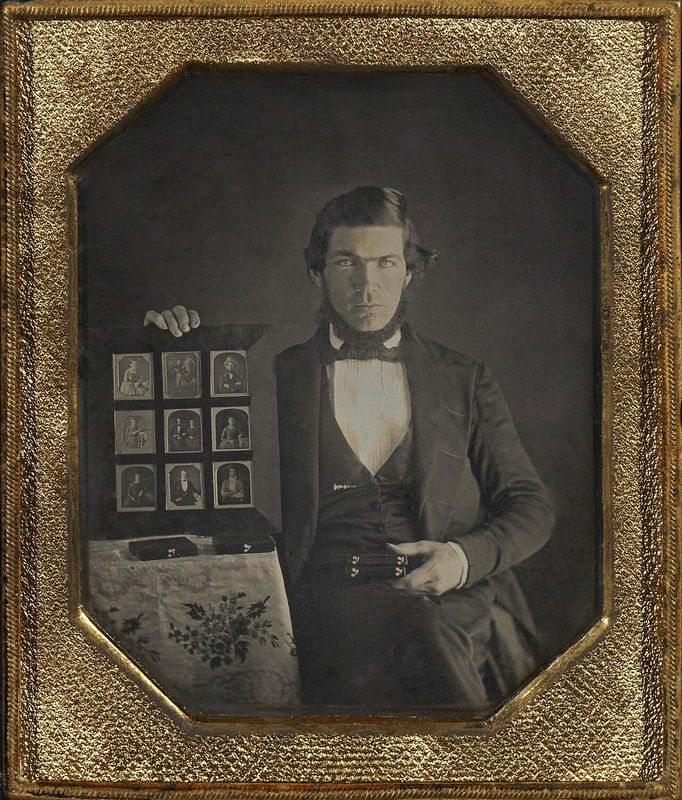
Almost four centuries later, the target changed but the script didn't. In 1839 a machine “learned” to make a picture, and the verdict formed almost at once: a photograph could not be art, because it was made by a machine and not by human creativity. The painter Delaroche supposedly cried "From today, painting is dead" — a line he almost certainly never said, a founding myth we wrote for a panic that wanted one, and the real Delaroche admired it. The poet Baudelaire gave the complaint its highbrow form, ruling that photography's only honest place was as the servant of art and the sciences, never their equal. Beneath the aesthetics sat money: Paris studios were stamping out more than a hundred thousand portraits a year by the 1850s, and the painters who sold faces for a living watched their trade evaporate. Then the impossible thing happened anyway. Relieved of the duty to copy the world (the camera had that job now), painting walked off to where the lens couldn't follow, into light and feeling and abstraction. Photography didn't kill painting. It freed it, into Impressionism and everything after.
Sixty years on, the same funeral, a fresh body. In 1906 John Philip Sousa warned that the phonograph and the player piano had arrived "in substitute for human skill, intelligence, and soul." He coined the term we still use, "canned music," and mourned the parlor pianos he was sure the machine would silence. Two things sat under the eulogy. One was a ledger: recordings paid composers nothing then, and Sousa's own marches were selling millions of cylinders for which he collected not a cent. He confessed it himself — "swayed in part by personal interest." The other was the punchline: Sousa's was one of the most-recorded bands on earth. The man calling it soulless was its biggest star.
So here is the anatomy, unchanged in five centuries: a machine does the thing; someone declares the thing soulless; there is usually money bleeding somewhere beneath the sermon; and the loudest mourner is, as often as not, already using the tool. Sometimes soulless names a real wound. Sometimes it's the velvet rope at the door. (And yes, I owned up to mine at the start.)
And nearly every time, the soul didn't die. It moved. The portrait painter's bread was gone, but painting had more life ahead of it than behind. The parlor piano fell quiet, and the century that followed held more music, by orders of magnitude, than any before it. The container the critics were clutching really did break: they were right about that, and right to grieve it. They were only wrong about where the soul had been living.
When the critics are right
The pattern has had a villain: the gatekeeper crying soulless to defend a trade or a royalty check. But sometimes the people saying it aren't guarding their turf — they're guarding something true. My clearest example is a place I love.
Hacker News (the least sentimental room on the internet, full of engineers who ship AI-written code all day) recently added one line to its rules: Don't post generated comments or AI-edited comments. HN is for conversation between humans. It isn't a ban on AI; the moderators use the tools themselves, and it lets an AI-assisted essay like this one straight through: in an article the worth is the idea, in a comment it's the company. It bans passing machine words off as your half of a conversation. Because nobody opens the comments to learn what an LLM thinks — they come to meet a person. Run the words through a model and the meeting is gone.
This is the one place the title's word lands true. The photograph was never soulless; the soul wasn't in the rendering. A comment can be, because the contact was the point. When the whole worth of an act is a human was here, a machine doing it beautifully deletes the only thing it was for. (The catch: detection is mostly vibes, and keeps mistaking second-language writers for bots — right about the principle, shaky on enforcement.)
So the question was never is this cheating? It was where does the worth live? In the output (a function that runs, a draft you'll rewrite) and who made it is Baudelaire's mistake. In the contact (that a person spent themselves on you) and the critics are simply right. Which is which isn't a rule you can write down: it's the taste this whole essay has been chasing, the scarce thing. But taste only tells you where to look; it doesn't make you safe. And it isn't fixed: where the worth sits depends on who's asking. One buyer wants a table that holds the lamp; the next wants the one a cabinetmaker shaped by hand, and pays for the hand, neither wrong, because the worth was never in the table. It was in the valuing. Under all of it runs the one asymmetry that doesn't move: put the worth in the result, and a machine can meet you there, and will. Put it in the human — that someone was here — and no machine reaches it, ever. That last thing isn't taste. It's contact, and it's the only soul the word soulless can't lie about.
Cold comfort
None of this comes for free. The loudest cost is the oldest: some people get crushed. The hand-weavers the power loom displaced didn't all find a place in the new factories. The compensation the rest of us bank, the cheaper cloth, the better jobs downstream, often arrived a generation too late for the people who paid for it. Who shares in a machine's gains was never settled by the machine — that part is a human question, and the worst answers are the coercive ones: the law that shields the incumbent, the license that locks the displaced out of the next trade. But that cost, at least, we can see. There's a quieter one we tend to wave away.
It's this: hand over the doing, and the faculty that did it can fade. The worry is as old as writing: in Plato's Phaedrus, Socrates frets that letters will wreck our memory, a warning we have only because he wrote it down. He was half-right: we surrendered our memory to the page and built a civilization with the freed hands. But it was a trade. London cabbies, memorizing the city's maze for their license, physically grow the part of the brain that finds its way; people who lean on turn-by-turn directions navigate worse. We didn't lose a job to the satnav. We lost a capacity — and became passengers on roads we used to know.
So the promise ahead is not hand it all over and go free. It is better than that, and harder: a wager worth making only on terms the machine can't set for you — which parts of the doing you refuse to surrender, because they were the parts that made you.
Closer to home
I should stop hiding behind history, because the trade this is happening to is my own. I've written code for most of my life (I started at twelve, in 1984) and I love it the way you love a craft you've bled into. So let me describe the fear precisely, the one the cheerful essays skate past.
It isn't the junior who gets automated. It's the expert. It's the engineer who spent twenty or thirty years getting genuinely, deeply good — who can hold a whole system in their head, whose hands know the language cold — sitting beside a model that produces, in seconds and often well, what cost them a career to learn to do at all. The vertigo isn't that you can't keep up. It's that the thing you were best at just became the cheapest thing in the room.
And here is what no argument of mine can touch. You can follow every step of this essay (the soul moves, the value walks uphill to judgment, the computers became programmers) and still feel it in your body: the tiredness, the sense that ground you spent a life mastering keeps dissolving, the quiet grief of watching hard-won excellence turn into a commodity. A friend, a real optimist about progress, put it to me better than I can: his rational mind is convinced, but his body and soul are worn out by the churn. He's right on both counts. The argument is true, and it does not make the grief wrong, and an essay that pretended otherwise wouldn't deserve your time.
But sit with what the machine actually took. It took the typing — the rote part, the one that, once you'd learned it, was never really where the difficulty lived. What it can't reach is the rest: knowing which elegant design will rot in eighteen months, what's worth building and what to refuse, where the bodies are buried, what good even means here. The code was always the smallest part. Your edge was never the keystrokes. It was the taste. And taste is exactly what the room is short of now.
I won't sell you a clean comfort, though, because there's a real crack under this, the one the cabbies showed us. That taste was forged by the years of typing. You learned what breaks by shipping things that broke. If the next engineer never writes the code, if the machine does it from the first day, where does their judgment come from? I don't know. Nobody does yet. The move from doing to judging is real, and it's the same one Dorothy Vaughan made, but she had calculated for years before she ever ran the machine. Whether judgment can grow without the doing that used to grow it is the open question of this whole moment, and anyone who tells you they've settled it is selling something.
So I won't promise it's painless, or that everyone makes the jump; some of the best hands won't, and that is a real loss, not a rounding error. But the jump is real, and it lands where it always has: from being the fastest hands in the room to being the surest judgment in it. The machine made your execution cheap. It made your taste precious.
Passengers and Navigators
A few paragraphs back I left a question open — whether judgment can grow without the doing that used to grow it — and I won’t pretend to have settled it. But there’s one part I’m sure of, and the movie I grew up on put it in its title. Flight of the Navigator: the navigator could be the ship, which charted its own way across the galaxy, or it could be the boy — except the ship had poured its star maps into the boy's head, and the boy was the one flying it home. Judgment works the same way. It doesn't come from watching the machine fly; it comes from flying. You don't keep your taste by handing over all of the doing. You keep it by choosing, deliberately, what stays in your hands. A passenger takes the route. A navigator holds the map. The difference is not how much each knows, but whose hands are still on the controls.
And the controls matter more here than they ever did with the satnav, for a reason worth stating precisely. The satnav is mostly right, so riding as a passenger is mostly free, which is exactly why we surrendered our sense of direction to it without a fight. The agent is different in kind. It is fluent and certain and sometimes wrong, and its wrong wears the same face as its right: the same clean prose, the same confident shape. The ship that taught itself to crack jokes was charming long before it was correct, and the charm is the tell. The better a machine gets at sounding right, the more it costs you when you can't tell whether it is — and the only one who can still tell is you, if you've kept the map in your own head.
Which is the trap, and it is the hard part. The map is not something you have; it is something the driving builds, and only as long as you drive. You learn which designs rot by shipping ones that rot; you come to know a city by getting lost in it. Give the doing to the machine and the visible work still gets done (the route appears, the code compiles) but the judgment that was quietly accruing the whole time simply stops being made, and you don't notice, because the output looks the same. The engineers who are navigators today earned it the slow way, years at the wheel before the machine could drive; the junior handed an agent on the first morning never logs the miles, and each time the fast path is the rational one, so the craft loses, a little at a time, the ground its own judgment grew from. We became passengers on roads we used to know. The sharper danger now is a generation of passengers on roads they never knew — who can't tell when the machine has lost the way, because they never had the map to begin with.
None of this is a case for doing it all by hand; that is just nostalgia in a work shirt. Nobody mourns long division, and you shouldn't spend your one life re-deriving what the machine has rightly made cheap. The discipline is selective, not total: ride as a passenger through everything you'll never have to answer for, and stay a navigator in the few places you're paid to judge. And the real skill, the one the machine's even fluency keeps hiding, is telling the two apart.
And if you build these things, the choice doubles, because every agent you ship turns its users into one or the other. An agent that buries its reasoning, plays for the nod, and hands down a finished answer is a factory for passengers. One that shows its work, says plainly where it's unsure, and leaves you to decide at the points that bear weight gives a navigator room to stay one. The first has less friction, which is most of why the industry is racing toward it. But the harder product is the better ethic, because what you're really choosing, when you design the thing, is what it does to the person on the far side of it: whether it grows them, or quietly drives in their place.
The wolf you feed
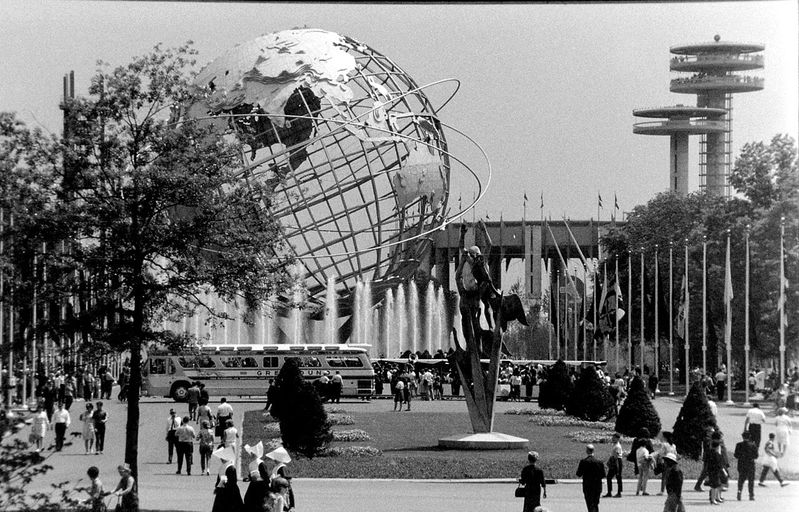
There's a film I love that almost nobody else did. Tomorrowland lost money and split the critics, and I'll defend it anyway. It opens on a boy named Frank at the 1964 World's Fair, hauling a jetpack he built himself; a judge asks what it's good for, and when Frank admits it doesn't quite work yet, he's waved off — a dreamer, wasting everyone's time. I knew that judge. I'd met him at sixteen, at the front of a classroom.
The idea it got mocked for is sturdier than the reviews suggest. A machine in the story broadcasts humanity's coming catastrophe back to us on a loop. And the twist is that the broadcast is what makes the catastrophe inevitable: shown the end of the world on endless replay, people don't rouse themselves to stop it, they slump and give up, and the giving-up is what seals it. A feedback loop, not magic. The girl who breaks it was raised on a parable: two wolves fight inside you, despair and hope, and the one that wins is the one you feed.
Look at what we're feeding. The loudest story about AI right now is the apocalypse (your work gone, your craft worthless, the species sidelined), and like the broadcast in the film, that story doesn't just predict the future; it helps build it, because people who believe there's nothing left worth making will not make anything. I'm not asking you to be a fool. I've spent this whole essay on the costs: the casualties, the capacity we let wither, the grief the argument doesn't touch. Eyes open, every one of them real. The wager is only this: despair is not the sole clear-eyed option. The wolf worth feeding isn't optimism — it's agency, the decision to pick up the tools while you're still tired, still afraid, still grieving what they've made cheap.
And notice who finds the dreamers in that film: Athena, a machine, whose entire purpose is to seek out the people who still want to build something and to stand beside them. It's not programming, she says. It's personal. That's the right picture of the thing on my desk. Not a replacement for the dreamer — a finder of them. The human in the loop, the machine in service of the spark, and not the other way around.
The machine went looking for the dreamers. Be one it can find.
Comments
No comments yet. Be the first to comment!